
The Week Ahead

Economic Announcements:
Earnings Reports:
- Dollar Tree (DLTR)
S&P 500 Analysis:
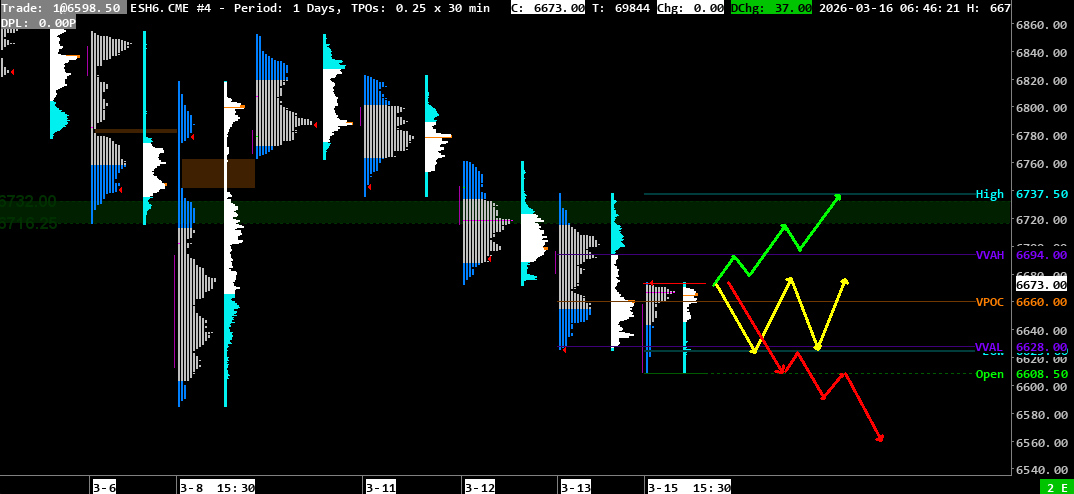
VPOC: 6660
VAH: 6628-6694
High-Low: 6625-6737.50
PP: 6660
Open: 6608.50 (Zone 3)
VIX: 25.17
SP500 Trend: Overall neutral sentiment 🟠
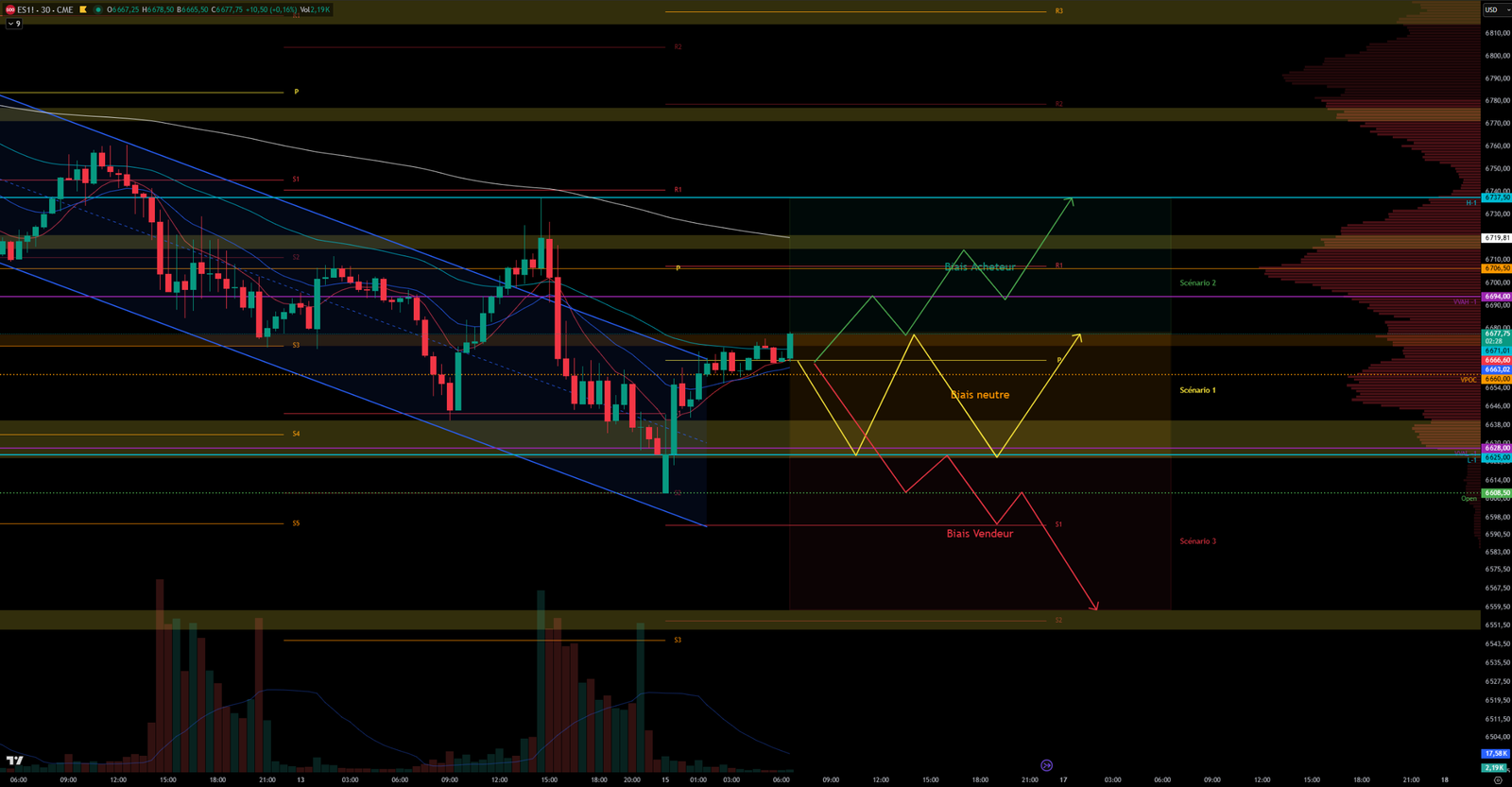
On Friday, the S&P 500 experienced a volatile and eventful session. The index began the day relatively stable, consolidating between the support zone of 6671-6676 and the resistance zone of 6715-6720. However, during the morning, sellers took control, driving the price down to the support zone of 6625-6640, before buyers stepped in and pushed the price back up to the resistance zone of 6715-6720.
At the US open, sellers regained control after a brief buying attempt and maintained pressure throughout the session, bringing the price back to the morning support zone of 6625-6640. The S&P 500 closed around 6630.
Today, the index opened in Zone 3 at 6608.50 and quickly re-entered Friday’s value area. The price moved through the support zone of 6625-6640 and climbed to the resistance zone of 6671-6676, where it appears to be slowing. The price remains within the bearish channel on the 1-hour chart.
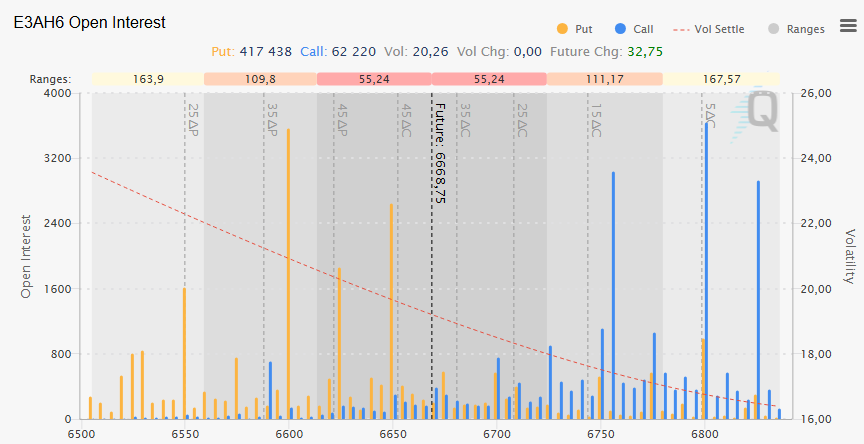
In terms of options, we observe significant Put zones at 6600 (a zone near today’s open), 6625, and 6650. Major Call zones are located at 6755, 6800, and 6825. The price could therefore trade between these boundaries of 6600 and 6800.
Today, we will receive the New York FED Manufacturing Index in terms of macro data.
Scenario 1 🟡: On rejection at the resistance zone of 6671-6676, the price could consolidate between this zone and the support zone of 6625-6640.
Scenario 2 🟢: On a break above the resistance zone of 6671-6676, the price could move higher and target Friday’s VAH at 6694, then aim for the resistance zone of 6715-6720.
Scenario 3 🔴: On a break below the support zone of 6625-6640, the price could continue its decline and target the support zone of 6550-6560
Zones of Interest:
- 6815-6830 (Resistance zone)
- 6771-6777 (Resistance zone)
- 6737.50 (Friday’s High)
- 6715-6720 (Resistance zone)
- 6694 (VAH-1)
- 6671-6676 (Resistance Zone)
- 6625-6640 (Support Zone + VAL-1 6628 + Friday’s Low 6625)
- 6550-6560 (Support zone)
60-second Chrono

Market situation
Wall Street posted declines as investors monitored developments related to the war in Iran. Brent crude oil prices surpassed $100 per barrel due to the closure of the Strait of Hormuz.
Economic Data
The Federal Reserve is expected to release industrial production data, with a projected increase of 0.1% in February. Capacity utilization is expected to remain stable at 76.2%.
Builder Sentiment
The NAHB Housing Market Index is expected to increase slightly to 37 in March.
Upcoming Events
The Federal Reserve is scheduled to hold an interest rate meeting, with expectations that rates will be maintained between 3.5% and 3.75%.
Market Volatility
Equities suffered from oil price volatility, and the three major US stock indices posted both daily and weekly declines. Analysts note a strong emotional influence on the market.
Impact of the Iran War
The conflict has driven commodity prices higher, prompting US farmers to quickly sell their crops. Grain prices have increased, pushing producers to sign forward contracts.
Currency Reaction
The US dollar gained ground against other currencies as a safe-haven asset, while currencies of energy-importing countries came under pressure.
Inflation Outlook
Inflation concerns persist due to rising energy prices, complicating the Fed’s monetary policy forecasts.
Macro

Growth & Industry: A Sharp Brake on the Real Economy
GDP (Quarterly) (Q4):
- Current: 0.7%
- Forecast: 1.4%
- Previous: 4.4%
Durable Goods Orders (Monthly) (Jan.):
- Current: 0.0%
- Forecast: 1.1%
- Previous: -0.9%
-> The US economy is experiencing a much sharper slowdown than anticipated. GDP growth has literally collapsed, coming in at half the consensus expectations and plummeting from the previous quarter’s 4.4%. Meanwhile, the industrial sector is struggling significantly: durable goods orders stagnated at 0.0%, completely missing the expected rebound of 1.1%. This is a very clear signal of a slowdown in the real economy and corporate investment.
Inflation (PCE) & Consumption: Inflation Persists, So Does the Consumer
PCE Core – Price Index (Annual) (Jan.):
- Actual: 3.1%
- Forecast: 3.1%
- Previous: 3.0%
Overall PCE Price Index (Annual) (Jan.):
- Actual: 2.8%
- Forecast: 2.9%
- Previous: 2.9%
Consumer Spending (Monthly) (Jan.):
- Actual: 0.4%
- Forecast: 0.3%
- Previous: 0.4%
-> The situation is paradoxical. Overall inflation (PCE) slowed slightly better than expected to 2.8%, but “Core PCE” (excluding energy and food, the Fed’s preferred gauge) refuses to decline and even ticked up slightly to 3.1%. Why does this inflation remain so sticky? Because, despite the slowdown in GDP growth, the American consumer refuses to reduce spending. Consumer spending beat consensus at 0.4%. As long as the consumer keeps spending, price pressure remains strong.
Employment & Sentiment: The Labor Market Holds Firm, Inflation Fears Ease
JOLTS Report – Job Openings (Jan.):
- Actual: 6.946M
- Forecast: 6.760M
- Previous: 6.550M
Michigan Index – Inflation Expectations (Mar):
- Current: 3.4%
- Forecast: 3.6%
- Previous: 3.4%
Michigan Consumer Sentiment Index (Mar):
- Actual: 55.5
- Forecast: 55.0
- Previous: 56.6
-> Businesses continue to seek workers: the number of job openings (JOLTS) rebounded sharply and significantly exceeded expectations. It is this tight labor market that keeps consumer spending afloat. The real breath of fresh air from this session comes from the Michigan surveys: consumer inflation expectations dropped sharply (both 1-year and 5-year). Americans increasingly doubt a sustained inflationary spiral, which is excellent news for central bankers.
Summary
The Shadow of Stagflation: This is the scenario markets dread most. On one hand, we have economic growth collapsing and industry at a standstill. On the other, stubborn underlying inflation, sustained by a labor market that continues to generate demand and a consumer who keeps spending. In other words: the economy is braking hard, but prices are not falling fast enough.
The FED’s Absolute Dilemma: With this data, the Federal Reserve is trapped. Theoretically, such weak GDP would justify considering rate cuts to restart the engine. But the Fed’s hands are tied: it cannot afford to ease monetary policy while Core PCE remains at 3.1% and consumption stays robust. The sharp decline in inflation expectations offers modest relief, but the most likely scenario is maintaining high rates despite a suffering economy.






0 Comments